

My walk is dedicated to the memory of my friend, Niels Rosendahl

Katherine
A tribute for Niels Rosendahl

Total Raised
$818

Total Distance
52km

Distance Goal
150km
Support My Walk for Mental Health Research
Did you know that 1 in 5 Australians experience a mental illness each year?
This October, I’m taking part in One Foot Forward to help Australians impacted by mental illness and suicide.
I'm walking to raise funds for Black Dog Institute to put ground-breaking new mental health treatment, education, and digital services into the hands of the people who need them most.
It would mean so much to me if you donated to support my walk.
Together, we can create better mental health for all Australians.
My Updates

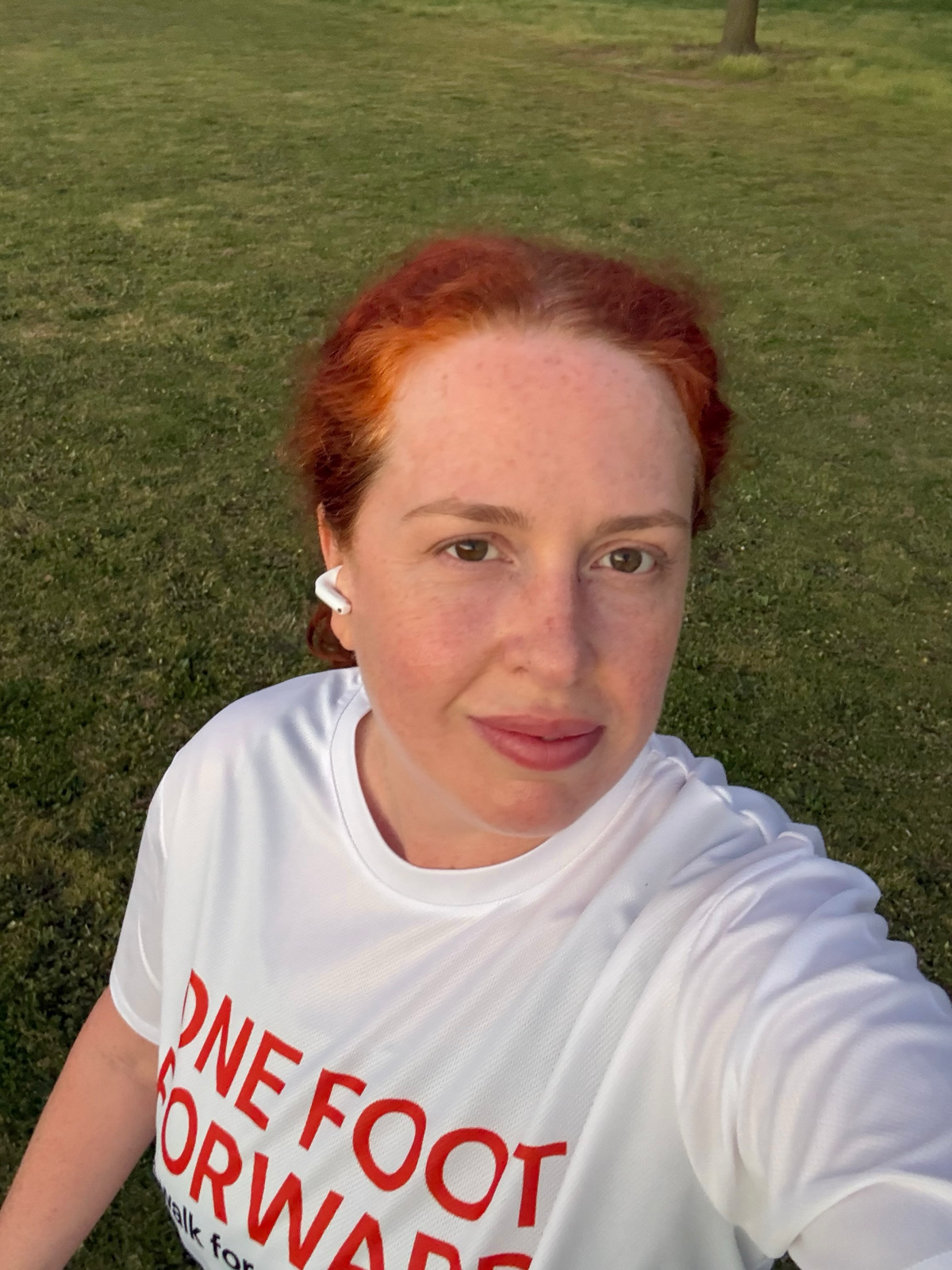
The Practised Heart
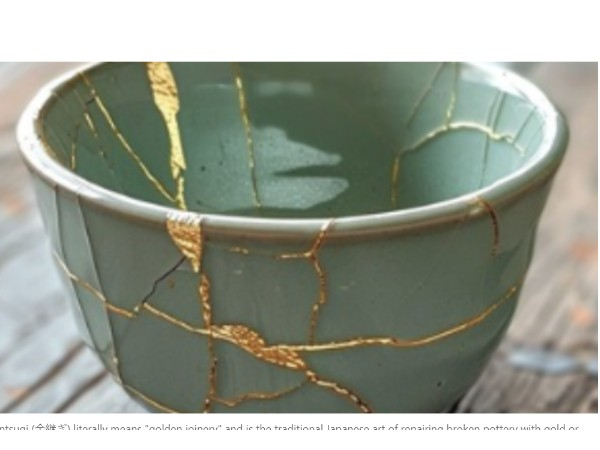
My heart hurts at the moment.
Not because of one enormous thing. In some ways, I think it would be easier to explain if it were, but instead it feels like an accumulation of smaller disappointments, grief and anger, alongside the things I cannot fix and the things I desperately want to change. It has made me think about how strangely narrow our language for heartbreak is, because we tend to associate a broken heart with romantic love when surely that gives romance far too much ownership over one of the most human feelings we have.
Our hearts break when people die and when people disappoint us, when something we have worked towards does not happen, when the world fails to change in ways we believed it could, or when someone we love is hurting and we cannot make it better. They break over injustice and loneliness, friendships that change, possibilities that disappear and ordinary disappointments that arrive on days when we have less capacity to absorb them. Sometimes they break because we have simply seen too much suffering for one week.
And sometimes there is no single explanation at all.
I have been thinking about the heart as a muscle, and about what it means for a muscle to be asked to carry so much. Muscles strengthen through use, but they also tire, strain and carry the memory of what we have asked them to do before. Hearts are not so different.
By the time we reach adulthood, most of us have had considerable practice at heartbreak. We have lost people, been disappointed, wanted things we did not get and got things that were not what we hoped they would be. We have watched relationships and friendships change shape, said goodbye to versions of ourselves we thought we would become, and discovered that loving people also means sometimes being helpless in the face of their pain.
There is a kind of muscle memory in surviving all of this. We learn that the intensity of a feeling is not evidence of its permanence, that grief changes shape and that disappointment eventually becomes something we can look at without feeling it quite so sharply. Mostly through experiences we would rather not have had, we learn that we can survive being profoundly sad.
But I am not convinced that practice necessarily makes us better at heartbreak. Sometimes it simply means the heart is already tired when the next thing arrives, and a relatively small disappointment finds us at exactly the wrong moment. Something we might ordinarily have absorbed suddenly feels enormous because the reserves we thought we had are nowhere to be found, leaving us surprised, and sometimes embarrassed, by the force of our own reaction.
I think we can be particularly unkind to ourselves in those moments because we know we have survived worse. We tell ourselves that this should not hurt this much, that we are too experienced or too resilient to be so affected, as though pain has ever been especially interested in proportionality.
There is no useful hierarchy of heartbreak. The fact that someone else is carrying something heavier does not make the thing in your hands weightless, and acknowledging your own pain does not diminish your capacity to recognise theirs. If anything, I think it can deepen it.
My heart has been hurting lately in ways that have nothing to do with my own life, too.
The last few weeks have been horrendous when we think about the women and children who have lost their lives, and I have found myself carrying a level of grief and anger that is difficult to put down. I spend much of my working life thinking about violence against women through the language we use to make change: evidence, prevalence, legislation, prevention and reform. I believe deeply in that work and in the possibility of change because I have seen change happen, but there is a particular kind of heartbreak in knowing how much we already know and still watching women die.
There is something deeply wearing about seeing another woman’s or child’s face in the news, reading about another family whose life has been irrevocably changed, and knowing the statistics so well that sometimes you can predict the paragraph that will follow. Alongside the grief is anger that we are still explaining things we have explained for decades, that women are still modifying their behaviour and calculating their safety, and that we can know so much about what drives violence, what makes it worse and what might prevent it, yet still find reasons to delay change.
That heartbreak is different from the small disappointments of our own lives, of course, and I don’t think empathy requires pretending otherwise. These experiences are not equivalent, but I wonder whether they nevertheless draw from the same emotional reservoir, because a heart does not neatly separate the personal from the collective. It simply carries what we give it.
The person we miss, the friend who is struggling, the thing we hoped would happen and didn’t, the terrible headline we read before breakfast, the injustice we cannot immediately fix and the story of a woman we never knew that somehow stays with us all sit somewhere inside us. Small griefs exist beside enormous ones, private disappointments alongside collective rage, and all of them ask something of the same heart.
Is this why the thing that finally overwhelms us can look strangely insignificant from the outside. It is not always the biggest thing that breaks the surface; sometimes it is simply the thing that arrives when there is nowhere left to put it.
I don’t think the answer is to care less, although there are certainly days when that seems appealing. Caring is exhausting, and hope itself can be exhausting when you have to keep renewing it in the face of evidence that change is slower than it has any right to be. But I don’t want resilience to mean becoming less affected by the world, or to become exceptionally good at reading about another woman’s death and moving on with my day. I don’t want disappointment to teach me not to hope, losing people to teach me not to love them, or heartbreak to make me particularly skilled at protecting myself from it.
Perhaps a practised heart is not one that has learned how not to break, but one that knows breaking is survivable; one that understands tenderness and strength are not opposites, and that being affected by something is not evidence that we are incapable of carrying it. Sometimes we will be caught completely off guard by our own sadness, and there does not need to be a sufficiently impressive explanation for it.
Maybe, with enough practice, heartbreak can also make us more generous with other people’s pain, less interested in whether their grief is proportionate, less inclined to rank suffering and less likely to decide what should or should not have broken someone, because we know what it is to be surprised by our own heart.
Mine hurts at the moment, and I am trying not to rush it out of that feeling or demand that it justify itself. Instead, I am trying to recognise that this is part of what I ask of it when I choose to care deeply about people, about change, about women and children I will never meet and about the possibility of a world that is better than this one.
That is a lot to ask of a muscle.
The practice, then, is not learning how to hurt less, but learning how to keep caring anyway.
Share






Thank you to my Sponsors

$303.64
Facebook Donation
$106.75
Derek
Go Kath!
$66.73
T Hunter
Go Kat! Champion amongst humans 🤩
$65.39
Katherine Berney
$65.29
Alison Thieme
Sending you love 💕 and hope for a future with better mental health care options
$55.95
Michelle
$55.95
Yvette
💕💕
$50.86
Facebook Donation
$23.81
Jazmeen
$23.33
Kristy Tass
One step at a time, you got this Kat! Big love xo
Thank you to my supporters

$65.39
Katherine Berney

$65.29
Alison Thieme
Sending you love 💕 and hope for a future with better mental health care options
$55.95
Michelle
$55.95
Yvette
💕💕
$50.86
Facebook Donation
$23.81
Jazmeen
$23.33
Kristy Tass
One step at a time, you got this Kat! Big love xo

Terms & Conditions Privacy Policy FAQs Contact Us
Copyright © 2026 Black Dog Institute | ABN 12 115 954 197

I’m walking in solidarity this October for Australians affected by mental illness and suicide. You are not alone.